
NEET Cutoff: Everything You Need to Know About Medical College Admission
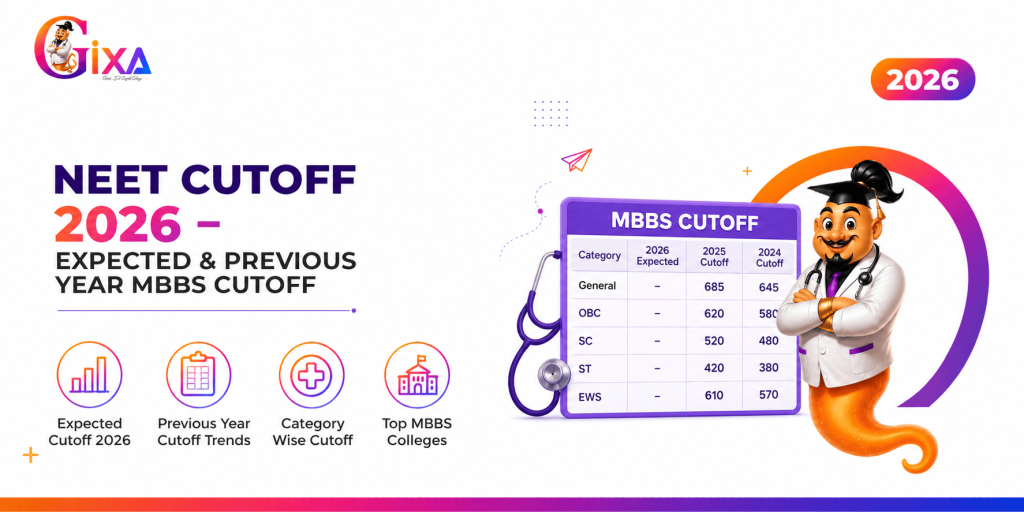
The NEET cutoff is one of the most important factors for every medical aspirant in India. It decides whether a student is eligible for admission into MBBS, BDS, or other medical courses in government or private colleges. After the NEET results are announced, the cutoff becomes one of the most discussed topics because it is directly connected to a student’s dream college.
In simple terms, the NEET cutoff is the minimum score or rank required to qualify for medical college admission. However, many students wrongly assume it is a fixed number. In reality, it changes every year depending on multiple factors.
What is NEET Cutoff?
The NEET cutoff is a qualifying benchmark set by the National Testing Agency (NTA) and counselling authorities. It is used to shortlist students for the counselling and admission process.
There are two important types of cutoff:
Qualifying Cutoff
Minimum marks required to pass the NEET exam
Admission Cutoff
Rank or score required to get admission in a specific college
Most students focus on the admission cutoff because it determines their chances of getting into a particular medical college.
Why NEET Cutoff Changes Every Year
NEET cutoff is not fixed because it depends on real-time conditions and competition trends, such as:
- Number of students appearing for NEET
- Difficulty level of the exam
- Total MBBS seats available across India
- Performance of top rankers
- Reservation and quota system
- State-wise counselling rules
Because of these factors, cutoff trends vary every year, making it unpredictable.
NEET Cutoff for Government Medical Colleges
Government medical colleges are the first choice for most NEET aspirants because of affordable fees, better clinical exposure, and a strong academic reputation. However, they are also the most competitive.
Admission into these colleges depends on:
- NEET rank
- Category and reservation rules
- All India Quota (AIQ) or State Quota
- Counselling choice filling strategy
Top government colleges usually require very high ranks, while some state-level colleges may offer admission at comparatively lower ranks, depending on seat availability and counselling rounds.
Why Students Get Confused About NEET Cutoff
After NEET results, many students feel stressed and confused because:
- Rank does not directly show college options.
- Cutoff varies for every college.
- AIQ and state quota rules are different
- Counselling rounds can change final outcomes.
- Online information is often inconsistent.
Due to this, students end up checking multiple sources without getting clear guidance.
How NEET College Predictor Helps Students
To overcome this confusion, many students use a NEET College Predictor web application or mobile app. These tools help students understand their chances of admission in different colleges based on real data.
The system works by analyzing:
- NEET score or rank
- Previous year cutoff trends
- Category and quota details
- College-wise admission history
Based on this data, it suggests realistic colleges where a student may have a chance of admission.
This helps students move from confusion to clarity and make better counselling decisions.
Simple Understanding of NEET Cutoff
Instead of treating the cutoff as a single fixed number, students should understand it as a competition range that changes every year.
Your admission chances depend on how your rank compares with other students in the same year.
- A higher rank improves the chances of getting a government medical college.
- A moderate rank may lead to state or private colleges.
- Lower ranks may open options in alternative medical courses.
Final Conclusion
The NEET cutoff plays a crucial role in medical admissions in India. It helps determine eligibility for government and private medical colleges, but it is not a fixed or guaranteed number.
Instead of focusing only on marks, students should understand cutoff trends, counselling patterns, and use smart tools like NEET College Predictors for better guidance.
With the right strategy and awareness, every NEET aspirant can make confident decisions and move closer to their dream of becoming a doctor.